Tourism is no longer just about flying to a beach resort for a week. The industry has evolved into a massive network of specific interests and travel styles. You can now find a travel category for almost any hobby or passion you have.
This evolution is great news for travelers. It means you can tailor your trips to match exactly what you want to experience. You do not have to settle for a generic package tour if you want something unique.
Students of tourism need to understand these distinctions clearly. The definitions help us analyze how people move around the globe and what motivates them. This guide breaks down the major and niche categories of travel existing today.
The Core Categories
We can group most travel into a few main buckets based on the primary motivation of the traveler. These are the foundations of the industry.
Recreational Tourism
This is the most common form of travel. You likely know it as the typical vacation. The main goal here is relaxation and escape from daily routine.
People engage in recreational tourism to recharge. You might spend a week at a beach resort, go camping by a lake, or visit a theme park. The focus is purely on enjoyment and rest.
- High volume of travelers
- Seasonal peaks (summer or holidays)
- Focus on comfort and entertainment
Cultural Tourism
Cultural tourism focuses on learning about the lifestyle, history, and art of other people. You travel specifically to understand how others live or lived in the past.
This type includes visits to museums, historical monuments, and festivals. You might travel to Rome to see the Colosseum or to Kyoto to visit temples. It is an educational experience disguised as leisure.
- Immersion in local traditions
- Visits to heritage sites
- Interaction with local communities
Nature Tourism
You choose this type when the destination’s natural environment is the main attraction. It includes everything from visiting national parks to watching sunsets on a mountain.
This category often overlaps with others, but the primary draw is the scenery. You want to see landscapes that differ from your home environment.
Niche Tourism Categories
The industry gets more interesting when we look at specific niches. These cater to very specific needs and are growing faster than mass tourism.
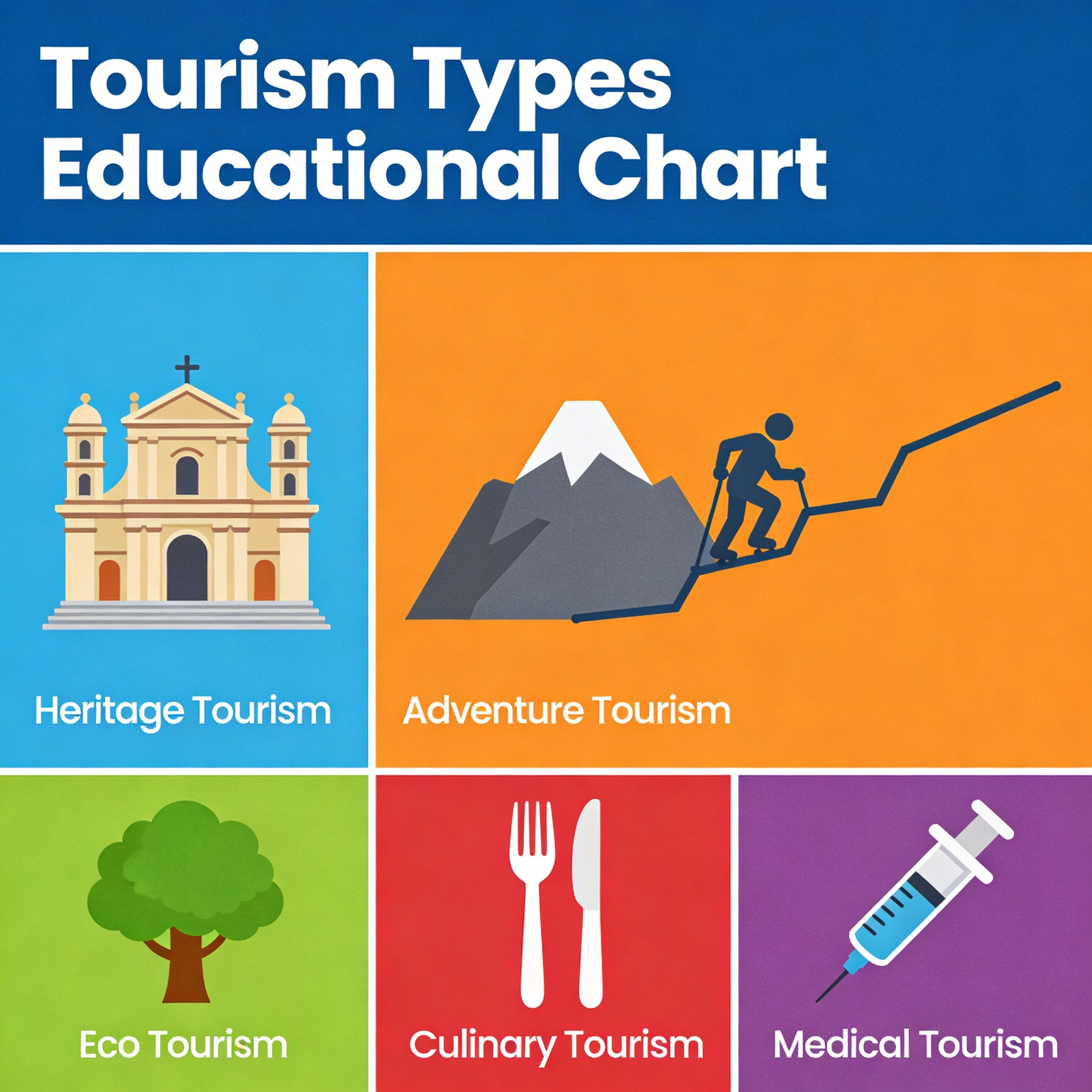
Eco Tourism
Eco tourism goes beyond just visiting nature. It involves responsible travel that conserves the environment and improves the well-being of local people. You can read our detailed guide on [Eco tourism] to understand the full scope.
You participate in conservation efforts or choose accommodations that have zero carbon footprint. It is travel with a conscience.
Dark Tourism
This is a fascinating and controversial sector. Dark tourism involves visiting places associated with death, tragedy, or the macabre. We cover this extensively in our dedicated [Dark tourism] section.
You might visit battlefields, former prisons, or disaster sites. The goal is historical understanding and empathy, not entertainment.
Adventure Tourism
You seek risk and adrenaline here. Adventure tourism divides into “hard” and “soft” categories depending on the danger level.
Soft adventure includes hiking or snorkeling. Hard adventure involves rock climbing, paragliding, or trekking in remote areas. You need physical fitness and often specialized gear for these trips.
Medical Tourism
People travel across borders specifically to receive medical treatment. You might do this because the quality of care is better or the cost is significantly lower than at home.
Common procedures include dentistry, cosmetic surgery, and complex operations. Countries like Turkey, Thailand, and Mexico are major hubs for this sector.
Religious Tourism
This is one of the oldest forms of travel in human history. You travel for spiritual reasons rather than pleasure.
Pilgrimages to Mecca, Jerusalem, or the Vatican fall under this category. The journey itself is often as important as the destination. You seek spiritual growth or fulfillment of religious duties.
Business And Professional Travel
Not all travel is for fun. A huge portion of the industry revolves around work.
MICE Tourism
MICE stands for Meetings, Incentives, Conferences, and Exhibitions. You travel to attend a professional gathering or a trade show.
Companies spend billions on this sector annually. You might fly to Las Vegas for a tech conference or to Berlin for a trade fair. These travelers typically spend more per day than leisure tourists.
Educational Tourism
The main objective here is learning. You might travel abroad to learn a new language or attend a university exchange program.
School trips and study abroad semesters are prime examples. You combine living in a new place with structured learning goals.
Emerging And Modern Trends
The world changes, and so does the way we travel. New technologies and social shifts create new tourism types.
Space Tourism
This is the newest and most exclusive frontier. Billionaires and specialized companies now offer trips beyond Earth’s atmosphere.
You pay a premium to experience zero gravity or see the planet from above. While it is currently for the ultra-rich, technology may make it accessible to more people in the future.
Voluntourism
You combine a holiday with charity work. The name comes from mixing “volunteer” and “tourism.”
Travelers might spend a week building schools or teaching English. You get to see a new country while feeling like you made a difference. However, critics argue about the actual long-term impact of short-term volunteering.
Rural Tourism
This is the opposite of city breaks. You travel to countryside areas to experience farm life or a slower pace of living.
Agrotourism is a big part of this. You might stay on a working farm, pick fruit, or help with animals. It supports rural economies that might otherwise struggle.
Culinary Tourism
Food is the main reason you travel in this category. You choose a destination specifically to eat its famous dishes or drink its wine.
You attend food festivals, visit vineyards, or take cooking classes. The memory of the trip is tied directly to the flavors you experienced.
Comparison: Mass Tourism VS Alternative Tourism
Students often need to distinguish between the big picture and the niche. Here is how they compare in practice.
Scale And Impact
Mass Tourism involves large numbers of people going to the same places at the same time. Think of crowded beaches in Spain or bus tours in Paris. The impact on the local environment is high due to volume.
Alternative Tourism (like Eco or Rural) involves small groups or individuals. You visit less crowded areas. The pressure on local resources is much lower.
Economic Flow
In Mass Tourism, much of the money often leaks out of the country. You pay international hotel chains and foreign tour operators.
In Alternative Tourism, money stays local. You pay family-owned guesthouses and local guides. This supports the community directly.
Interaction Level
Mass tourists often stay in a “bubble.” You might not interact with locals other than service staff.
Alternative tourists seek connection. You actively try to meet residents and understand their daily lives.
Why Understanding These Types Matters
You might wonder why we need so many labels. Why not just call it all “travel”?
For The Traveler
Knowing these categories helps you plan better. If you know you hate crowds, you avoid mass tourism destinations. If you want to learn, you look specifically for cultural or educational tours.
It helps you manage your expectations. You do not book an adventure tour if you want to sit by a pool.
For The Industry
Tourism professionals use these categories to market their services. A hotel needs to know if it targets business travelers or families.
Destinations use this data to develop their infrastructure. A city focusing on MICE tourism needs big convention centers. A region focusing on Eco tourism needs protected parks.
For The Student
Academic research relies on these definitions. You cannot study the impact of tourism without defining what kind of tourism you are measuring.
Social impact varies wildly between types. Dark tourism affects a community differently than Party tourism. Precision in language leads to better analysis.
The Future Of Travel Categories
The lines between these types are blurring. You rarely do just one thing on a trip anymore.
You might go on a business trip (MICE) but stay two extra days to hike (Adventure) and visit a museum (Culture). We call this “Bleisure” (Business + Leisure).
Sustainable practices are also becoming part of every category. Luxury hotels now try to be eco-friendly. Adventure tours now emphasize safety and conservation.
Virtual tourism is another rising star. You can tour museums or cities through VR headsets without leaving your home. It challenges the very definition of what it means to travel.
Summary Checklist For Travelers
Before you book your next trip, ask yourself what type of experience you really want.
- Relaxation: Look for Recreational or Rural options.
- Knowledge: Search for Cultural, Dark, or Educational tours.
- Thrill: Book an Adventure or Sports trip.
- Purpose: Consider Voluntourism or Eco tourism.
- Health: Investigate Medical or Wellness tourism.
Your choice defines your impact. Every ticket you buy supports a specific type of industry. Choose the one that aligns with your values and your dreams.
Travel is a powerful tool. It educates, heals, and connects us. Whether you are a student writing a paper or a backpacker planning a route, understanding these types gives you a better map of the world. Handles “reflective” and personal essays exceptionally well. Writers from powerpoint presentation writing service https://writepaper.com/do-my-powerpoint-presentation help you articulate your own experiences and insights in a professional, polished way that still feels authentic.